Earlier this year, I tried using large language models to complete a frontend-backend project. See "Recording Using AI to Complete an Entire Frontend-Backend Project". At that time, my view was that it was difficult to use. Even with existing code in other languages as reference, it was still hard to reproduce. To a large extent, human participation in code writing was still needed (especially for compilation issues and runtime bugs).
However, the rapid progress of agents this year has also driven the rapid development of Vibe Coding, and with my growing familiarity with the Next.js framework, this task seems to have become simpler.
As a researcher in the compression field, I've always been troubled by having to find experimental results of old methods from past experimental data every time I draw a new RD curve, and write matplotlib code to plot it. These past few days, I finally couldn't resist the urge to create an application for managing related experimental data and visualizing it — RD Curve AI. Everyone is welcome to try it out and give me some suggestions for improvement.
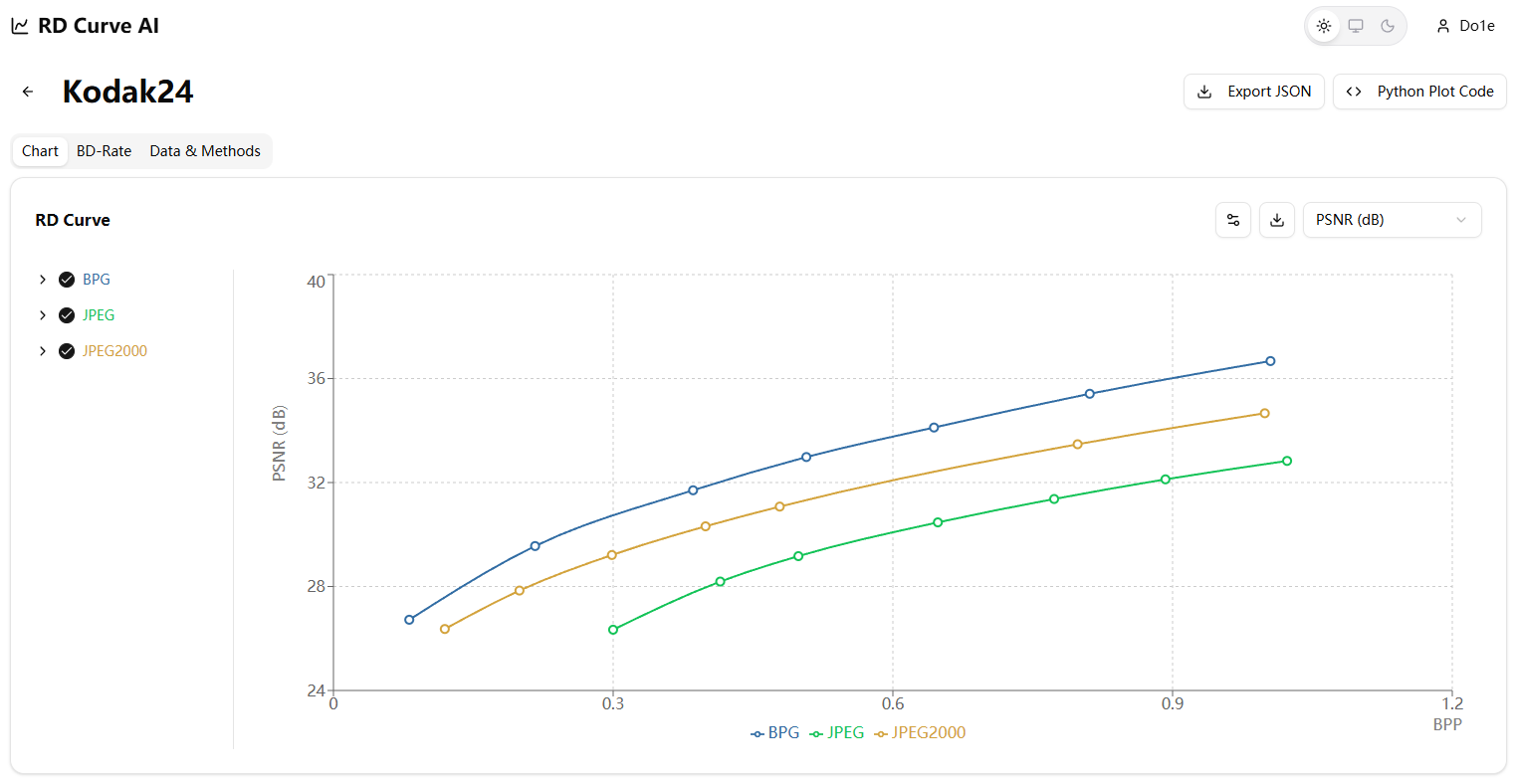
Chart
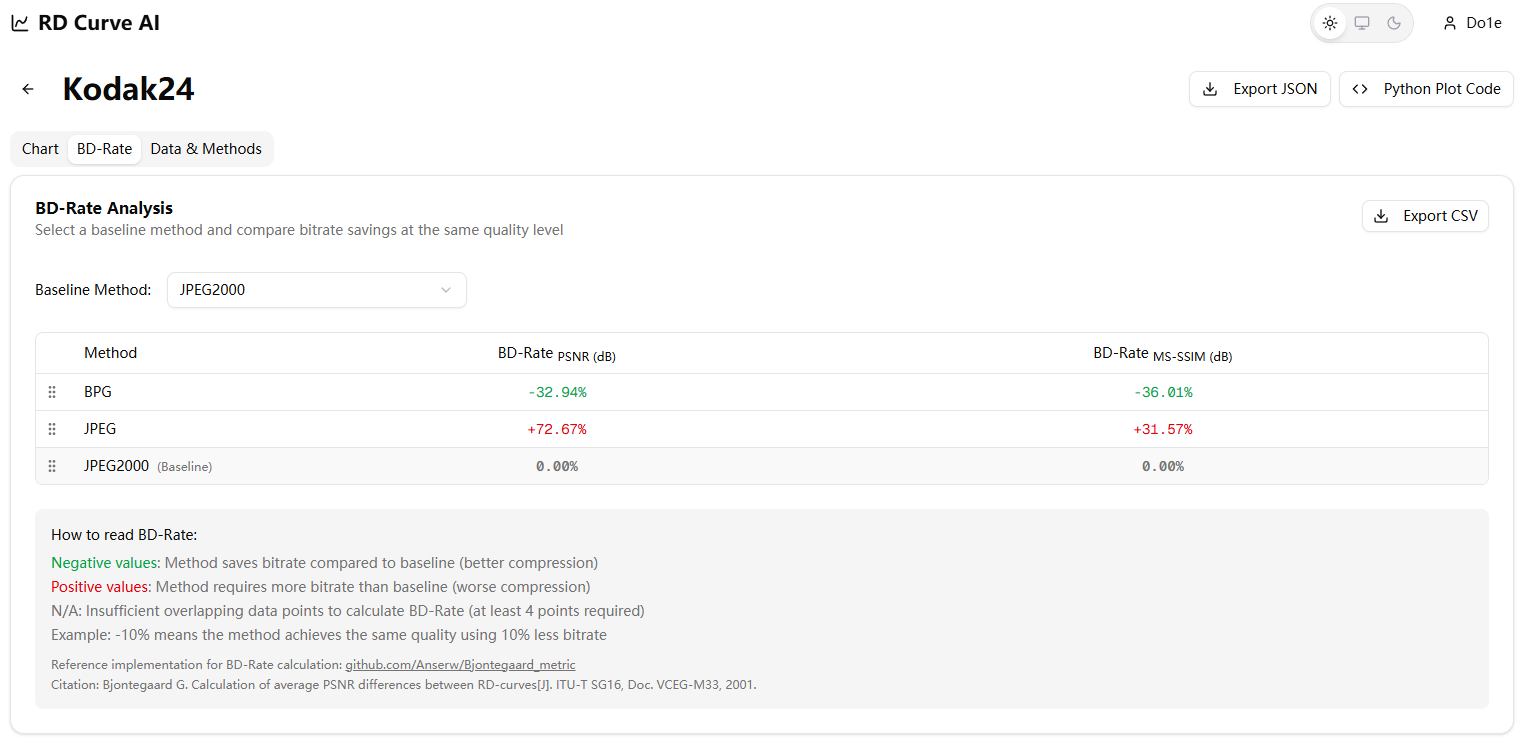
BD-Rate
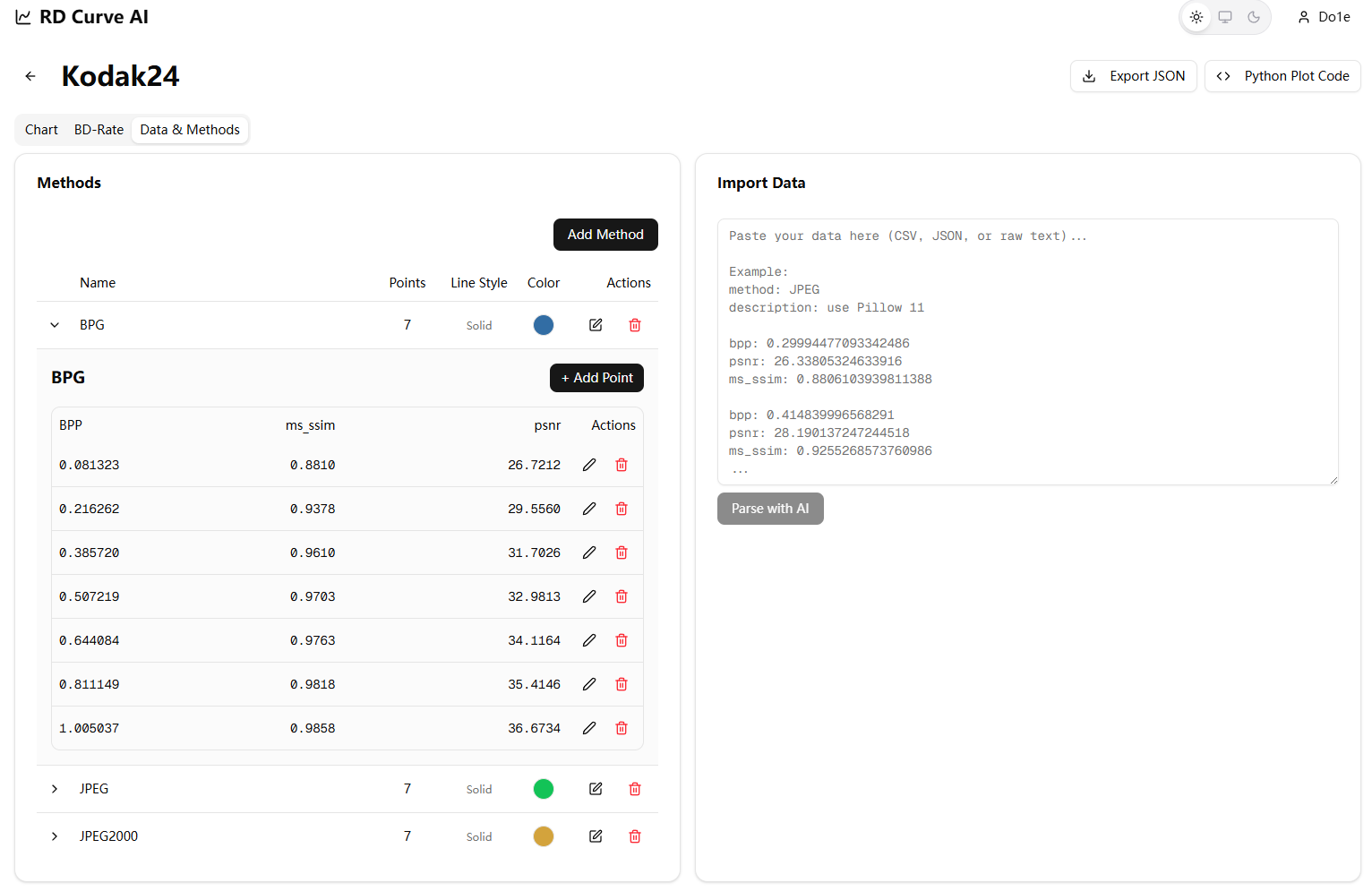
Data Import
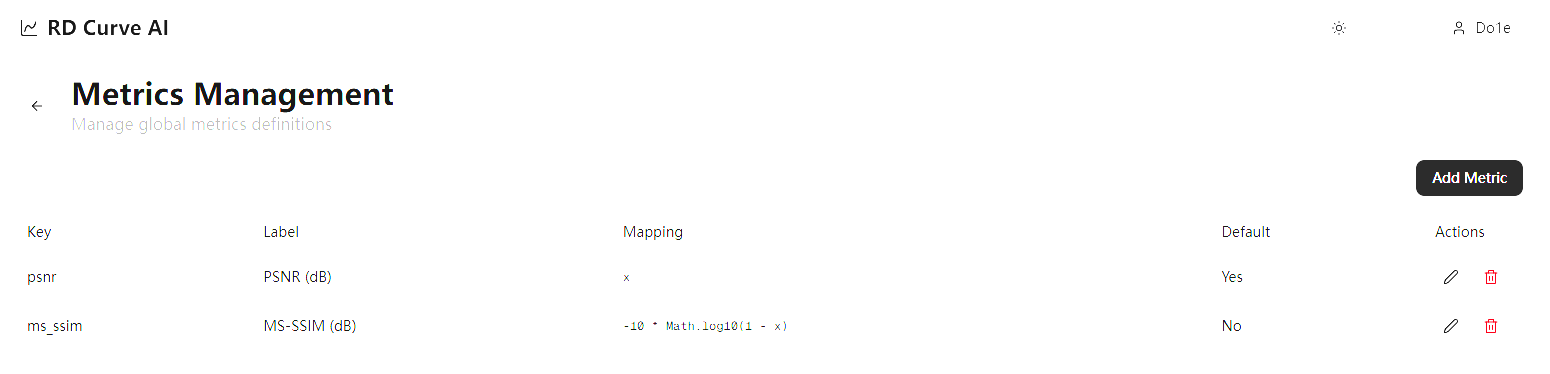
Evaluation Metrics
This Vibe Coding actually only took one day to complete. I personally think it went quite smoothly. The general process is as follows:
- First, write a detailed prompt describing the tech stack, components, and other content to use. Actually, it doesn't need to be organized particularly well, as long as there are enough items to cover the requirements in your mind. Here I also give my example:
CodeBlock Loading...
- Besides this prompt, I also fed in some previously written password encryption and better-auth configurations, because based on previous experience, this part requires many rounds of AI iteration to output code that meets my expectations.
- Write an overall project prompt, this can be handed to AI, but still needs some fine-tuning of its content. Here I also give my fine-tuned version:
CodeBlock Loading...
- After spending some time, AI can set up the entire framework. At this point, you need to hand each error message from the editor to AI to solve one by one.
- When the project runs successfully, it's time to gradually adjust features and frontend pages. This part is also the most time-consuming. For example, I thought of adding a BD-Rate calculation feature midway through. Iterating repeatedly here might eventually get you the project you want.
Finally, I want to explain that Vibe Coding still cannot help beginners complete a relatively complex system task. While people don't necessarily have to fully understand the code AI writes, they must have a relatively comprehensive grasp of the system framework. Here I quote a bold statement: "AI (almost) cannot help you complete tasks you don't know how to do". My familiarity with the Next.js framework grew gradually through self-study this year and completing small projects or improving open source projects with AI's help. Only after accumulating this experience can AI become an excellent tool for improving efficiency.